21st July 2026
We are fortunate at St Brendan's to have green spaces across our campus, providing valuable habitats for wildlife and creating opportunities for nature to thrive alongside College life.
One of the best examples is the Bee Orchid (Ophrys apifera), one of Britain's most unusual wildflowers. Around 20 Bee Orchids have been spotted across the College site. By leaving some areas unmown during the growing season, these plants can flower, produce seed and spread naturally.
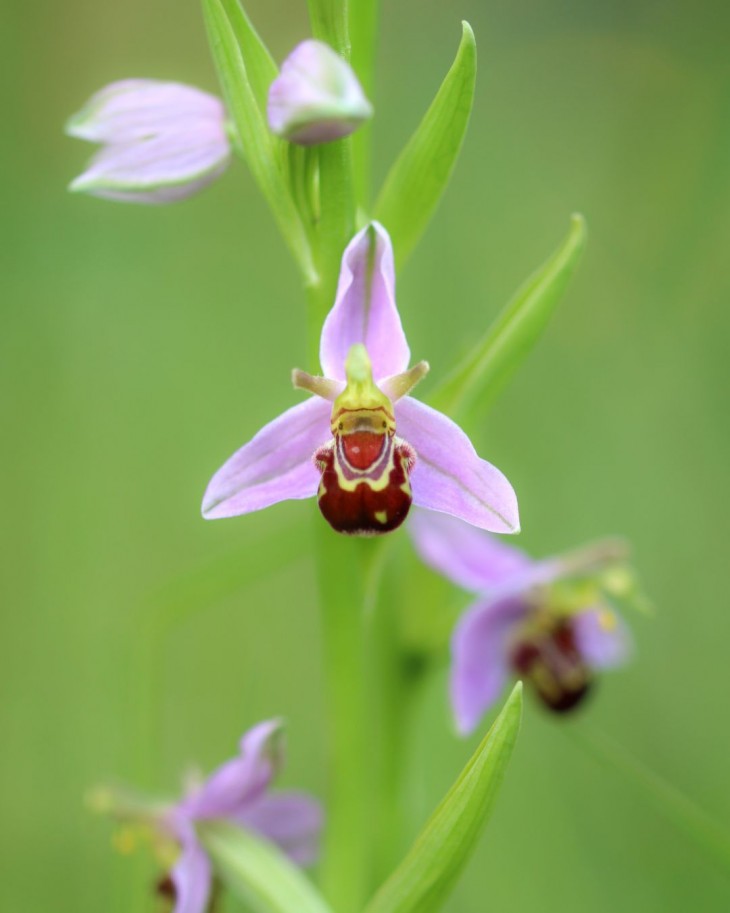
Photo credit: Ethan, St Brendan's student, for the Bee Orchid images featured in this article.
The Bee Orchid is famous for mimicking a bee, making it one of nature's most impressive tricksters.
This adaptation helps attract pollinators and supports the plant's survival. Despite their delicate appearance, orchids produce some of the smallest seeds in the plant kingdom. These tiny seeds rely on specialised soil fungi for the nutrients needed to germinate and grow.
The success of the Bee Orchid is just one example of the College's commitment to biodiversity. Plans are also underway to rewild the field opposite the main College buildings, creating more space for wildlife and encouraging a greater variety of plants, insects and other species to thrive.
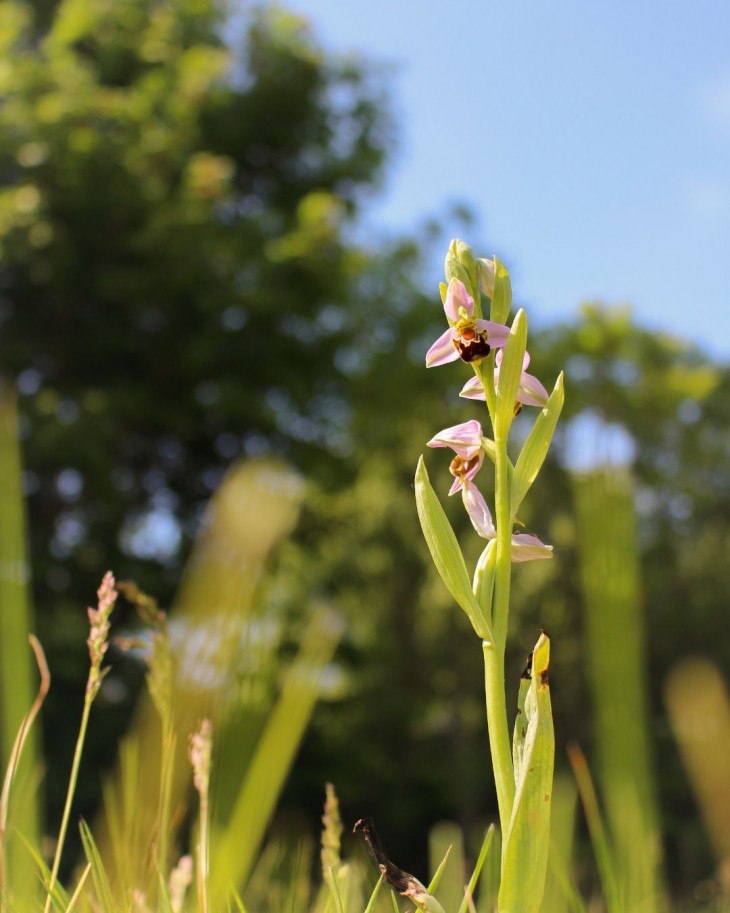
Bee orchid
Alongside these efforts, the College is reducing its environmental impact through a range of sustainability initiatives.
Ground source heat pumps heat the B and E buildings, air source heat pumps power the Sports Pavilion, and solar panels on the D and E buildings generate clean electricity. Recycling facilities, water refill stations, rainwater harvesting and motion-sensor lighting also help conserve resources and reduce waste across campus.
Together, these measures are helping to create a greener, more sustainable campus where both wildlife and students can flourish.
With special thanks to St Brendan's student Ethan for his contribution to this article and for helping highlight the Bee Orchids growing across the College site.
