
Design Engineering
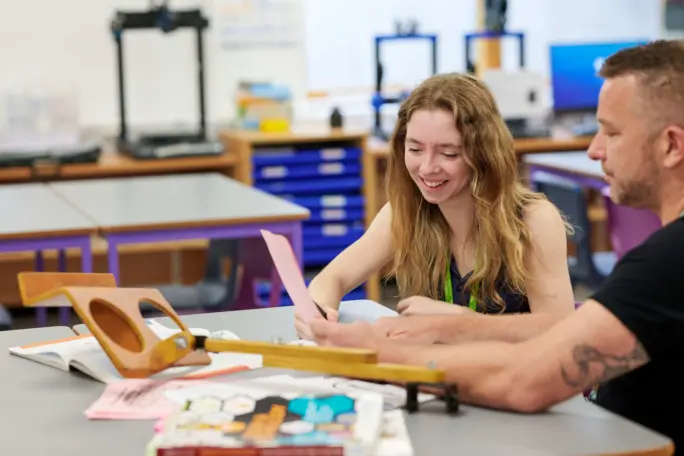
Design Engineering A Level gives you the opportunity to create, innovate and solve real‑world problems through engineering design. You’ll explore mechanical and electrically controlled products while developing technical and creative skills.
- Qualification
- A Level
- Exam Board
- Pearson Edexcel
- Duration
- 2 years
Why study Design Engineering at St Brendan’s?
Design Engineering at St Brendan’s allows you to simulate real engineering design practice by solving practical problems and developing functional products. You’ll gain hands‑on experience using industry‑standard processes within modern Design & Technology facilities.
Entry requirements
- 5 GCSEs at grade 4 or above
- GCSE English Language or English Literature at grade 4 or above
- GCSE Maths at grade 6
- GCSE Science at grade 5
- GCSE Design & Technology (or Engineering) at grade 4 is useful but not essential
- Students are recommended to take A Level Maths or Physics to support the technical demands of the course.
- Students who do not meet Maths and Science requirements may consider Engineering AAQ or Product Design as an alternative.

Course examination breakdown
What else do I need to know?
- 5 GCSEs at grade 4 or above
- GCSE English Language or English Literature at grade 4 or above
- GCSE Maths at grade 6
- GCSE Science at grade 5
- GCSE Design & Technology (or Engineering) at grade 4 is useful but not essential
Students are recommended to take A Level Maths or Physics (or AS Maths) to support the technical demands of the course.
Students who do not meet Maths and Science requirements may consider Engineering AAQ or Product Design as an alternative.
You’ll develop core knowledge and technical skills, including:
- Engineering principles with a focus on Maths and Physics
- CAD using SOLIDWORKS and Google SketchUp
- Design tasks and technical problem‑solving
- Students are expected to complete 4½ hours of independent study per week. Year 2:You’ll complete a Non‑Exam Assessment (NEA) project, involving:
- Designing a mechanical or electrically controlled product
- Investigating a real‑world problem
- Testing and refining functionality
- Conducting stakeholder interviews and industrial research
- Work experience is highly advised to support your understanding of industry practice. Skills developed: Engineering problem solving
- CAD and digital modelling
- Application of Maths and Physics
- Independent project management
- Analytical and technical thinking
Teaching includes theory lessons, practical tasks, CAD workshops and design projects. You’ll develop skills through structured learning and apply them in independent coursework projects reflecting real‑world engineering practice.
Assessment includes:
- Non‑Exam Assessment (NEA): A major design and engineering project
- Two written exams: Testing technical knowledge and application
Students receive regular feedback to support progress, improve technical understanding and refine design solutions.
- Design & Technology workshops
- CAD software including SOLIDWORKS and SketchUp
- Facilities for prototyping, modelling and testing products
Students are required to provide essential equipment and resources to support their studies.
Required equipment includes:
Scientific GCSE calculator (not on a phone)
A4 ring bound folder & 10 tab dividers
A4 lined pad or A4 lined exercise book where pages can be filed in your folder
Pencil Case with:
- Black or dark blue pens
- A green pen for corrections
- Sketching pencil, rubber, sharpener
- 30cm Ruler, protractor, compass
A pair of basic headphones suitable for use with a PC
Students must also purchase relevant course materials, including textbooks where required.
Students are expected to contribute towards materials used in coursework projects, and additional costs may apply depending on individual design choices.
Having access to a PC at home is strongly recommended to support CAD work and project development outside lessons.
Optional drawing equipment may also be useful depending on individual preferences.
The cost of any trips is the responsibility of the student.
Financial assistance is available through the student bursary scheme for eligible students.
Cannot be taken alongside Product Design (same qualification)
Should not be taken with Engineering AAQ
Students are advised not to take three coursework‑heavy subjects
Some progression routes require A Level Maths or Physics
Subject combinations should be discussed with staff to support future goals.
Design Engineering A Level supports progression into:
- Engineering and design‑related degrees
- Architecture pathways
- Apprenticeships in engineering and manufacturing
Many progression routes require A Level Maths or Physics, depending on career goals.
Students are encouraged to develop their understanding of engineering through independent investigation and work experience, which is highly advised to support industry awareness and real‑world application of skills.

Progression opportunities
Related courses
Textile Design
A LevelA Level Textile Design encourages students to develop their individual creativity through practical exploration and design. Working on proje…
Product Design
A LevelProduct Design A Level gives you the opportunity to create, innovate and solve real‑world problems through design. You’ll explore how aesthe…

Photography
A LevelPhotography A Level encourages freedom of expression and focuses on communicating ideas, thoughts and feelings, as well as documenting momen…