
Textile Design
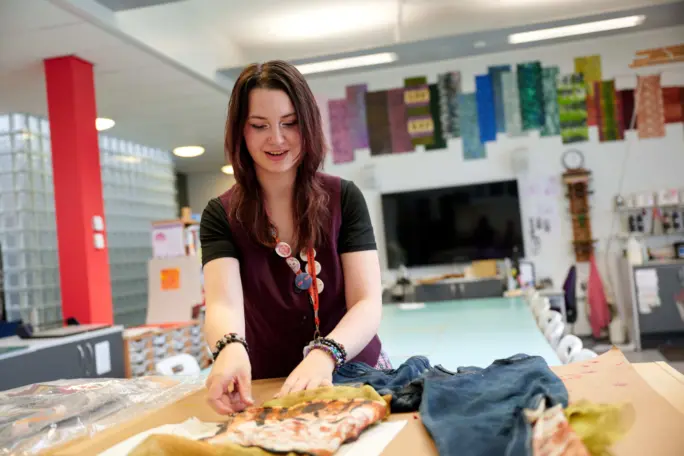
A Level Textile Design encourages students to develop their individual creativity through practical exploration and design. Working on projects based in fashion, furnishings or textile sculpture, you’ll build a portfolio with a strong emphasis on originality and creative thinking.
Projects are designed to help you understand the fundamental design process through research, sampling and idea development, leading to unique and exciting finished outcomes.
- Qualification
- A Level
- Exam Board
- OCR
- Duration
- 2 years
Why study Textile Design at St Brendan’s?
Textile Design at St Brendan’s offers a highly creative and practical learning experience. You’ll be encouraged to explore ideas independently while developing a strong understanding of design processes, materials and techniques.
With specialist teachers guiding your work, the course supports creativity, experimentation and personal expression while building confidence and independence.
Entry requirements
- Grade 4 or above in an arts or design based subject
- OR
- Bring a portfolio to enrolment that shows the skills and potential to succeed
- General entry requirements:
- 5 GCSEs at grade 4 or above
- GCSE English Language or English Literature at grade 4 or above
- GCSE Textiles or Art at grade 4 is desirable but not essential
- GCSE Maths at grade 3 or above
What else do I need to know?
You need Grade 4 or above in an arts or design based subject, OR
Bring a portfolio to enrolment that shows you have the skills and potential to succeed.
Portfolio checklist
- You must bring 5 images showing your strongest work. Choose one of the following:
- Your best work from the last year
- Work from your GCSE Art & Design course
- Your 5 best images from the summer task
These images should show creativity, skill, and how you explore ideas. Your portfolio can be digital or physical.
What You Could Include: Textile Design examples
- Textile Design
- Stitching or fabric manipulation
- Printing, dyeing or batik
- Textile illustrations or embroidery
- Material or fibre experiments
- Photos of finished textile or fashion outcomes
If you forget to bring a portfolio, you will need to complete a 45‑minute creative task during enrolment to secure your place on the course.
Year 1
You’ll take part in a series of projects that introduce a wide range of textile techniques, including:
- Collage
- Screen and lino printing
- Fabric dyeing
- Appliqué
- Machine and hand stitch
You’ll also use computer software to support the design process and develop ideas through research and sampling.
Year 2
You’ll choose your own area of study and set personal design briefs, building on the skills and experience gained in Year 1. You’ll work more independently to prepare for higher education or employment, with staff providing guidance and support as needed.
Students are also required to produce a written study about an artist or designer as part of their Personal Investigation.
Skills Developed
- Creative and independent working
- Textile experimentation and sampling
- Research and idea development
- Use of digital design tools
- Evaluation and reflective thinking
The course is taught by specialist practitioners. Practical sessions are supported by demonstrations, theoretical background and critical studies to help you understand design decisions and contextual influences.
Assessment is entirely coursework‑based and completed over two units by the end of Year 2. Your work includes practical outcomes, development work and a written study.
Feedback is provided throughout the course to help refine ideas, improve technical skills and support creative development.
- Specialist textile teaching spaces
- Screen printing and printmaking facilities
- Sewing machines and hand stitching equipment
- Access to digital design software
Studio kit fee of £150.29 for Year 12, and £63.41 for Year 13 - this kit has all the essentials needed to complete the course and must be purchased before the start of the course.
Bursary support covers the cost of this kit.
Students may be required to cover the cost of materials and resources depending on the nature of their individual projects. Any additional costs will be discussed in advance to help students plan effectively.
Textile Design may be taken alongside Photography, Fine Art and Graphic Communication.
As creative subjects are practical and coursework‑intensive, workload should be carefully considered. Studying two creative subjects is permitted. Tutors will support students in choosing a balanced programme of study.
Textile Design A Level supports progression into:
- Textile, Fashion or Design‑related degrees
- Art Foundation courses
- Creative apprenticeships
- Pathways within fashion, interiors or applied textile industries
The portfolio developed during the course supports progression beyond college.
Enrichment opportunities support creative exploration and independent development. Students are encouraged to broaden their understanding of textile design through wider research, experimentation and personal projects.

Progression opportunities
Related courses
Product Design
A LevelProduct Design A Level gives you the opportunity to create, innovate and solve real‑world problems through design. You’ll explore how aesthe…
Design Engineering
A LevelDesign Engineering A Level gives you the opportunity to create, innovate and solve real‑world problems through engineering design. You’ll ex…
Photography
A LevelPhotography A Level encourages freedom of expression and focuses on communicating ideas, thoughts and feelings, as well as documenting momen…