
Product Design
Product Design A Level gives you the opportunity to create, innovate and solve real‑world problems through design. You’ll explore how aesthetic, ergonomic and functional products are designed and developed, while building practical and creative confidence.
This course is ideal if you enjoy designing, making and testing products, and want to develop both creative and technical skills in a hands‑on, project‑based subject.
- Qualification
- A Level
- Exam Board
- AQA
- Duration
- 2 years
Why study Product Design at St Brendan’s?
Why study [Course name] at St Brendan’s? (H2 title) whyStudy
Product Design at St Brendan’s allows you to simulate the work of professional designers, solving real‑life problems through creative and technical exploration. You’ll work in modern Design and Technology facilities and develop industry‑relevant skills using both digital and practical processes.
The course encourages independence, creativity and problem‑solving while being supported by specialist teachers throughout your design journey.
Entry requirements
- 5 GCSEs at grade 4 or above
- Including GCSE English Language or Literature at grade 4 or above
- GCSE Design & Technology at grade 4 is desirable but not essential
- GCSE Maths at grade 4 or above
- Students with strong Maths and Science may also consider Design Engineering as an alternative. Design Engineering and Product Design cannot be taken together as they lead to the same qualification.

Course examination breakdown
What else do I need to know?
- 5 GCSEs at grade 4 or above
- Including GCSE English Language or Literature at grade 4 or above
- GCSE Design & Technology at grade 4 is desirable but not essential
- GCSE Maths at grade 4 or above
Students with strong Maths and Science may also consider Design Engineering as an alternative. Design Engineering and Product Design cannot be taken together as they lead to the same qualification.
You’ll explore the real world of design through a range of activities, including:
- Design tasks and short practical activities
- Theory lessons and exam‑style questions
- Applied Maths within design contexts
- CAD skills using SOLIDWORKS and Google SketchUp
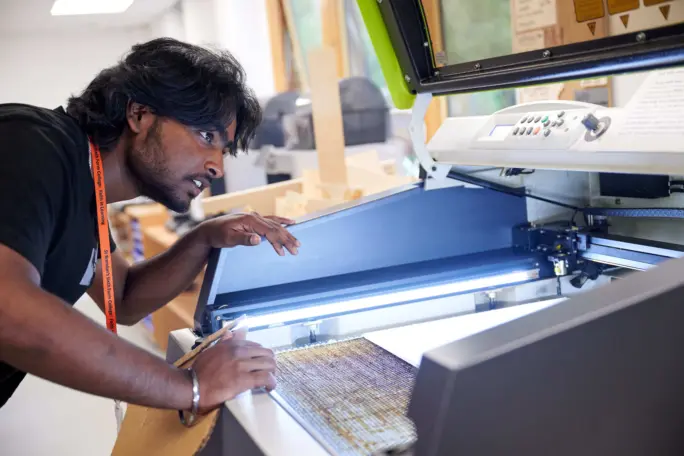
- 3D model making using laser cutting and 3D printing
- Students are expected to complete 4½ hours of home learning per week.
Year 2
You’ll begin and complete your Non‑Examined Assessment (NEA). This major coursework project involves:
- Choosing a real‑life design problem
- Investigating user needs and stakeholders
- Creating, testing and refining a product
- Conducting interviews and industrial research
- Simulating the work of professional designers
- Independent investigation and, where possible, work experience are strongly advised
Skills Developed
- Creative and technical problem solving
- CAD and digital modelling
- Independent project management
- Research, evaluation and decision‑making
- Communication and professional design thinking
Teaching combines theory lessons, practical tasks, design projects, CAD workshops and exam preparation. You’ll receive guidance throughout but will also be encouraged to work independently, reflecting the demands of design‑industry practice.
Assessment includes:
- Non‑Exam Assessment (NEA): A major iterative design project
- Written exams: Testing technical principles and designing & making knowledge
Regular feedback is provided throughout coursework and theory units to help refine ideas, improve technical accuracy and develop high‑quality final outcomes.
- Modern Design & Technology workshops
- CAD software including SOLIDWORKS and SketchUp
- Laser cutting and 3D printing equipment
- Facilities for hand sketching and model making
Students are required to provide some essential equipment and materials to support their coursework and independent study.
Required equipment includes:
Scientific GCSE calculator (not on a phone)
A4 ring bound folder & 10 tab dividers
A4 lined pad or A4 lined exercise book where pages can be filed in your folder
Pencil Case with:
- Black or dark blue pens
- A green pen for corrections
- Sketching pencil, rubber, sharpener
- 30cm Ruler, protractor, compass
A pair of basic headphones suitable for use with a PC
Students are also expected to purchase two course books, at a cost of approximately £20 each.
Having access to a PC at home is strongly advised, as this allows students to install CAD software and work more effectively on coursework outside lessons.
Optional drawing equipment, such as fine liner pens, colouring pencils or marker pens, may also be useful depending on individual project choices.
Any trip costs associated with the course are the responsibility of the student.
Financial assistance is available through the student bursary scheme, and students are encouraged to apply as early as possible if support is needed.
Product Design is compatible with most A Level subjects. However:
It is a heavy coursework subject, and students are advised not to take three coursework‑intensive creative subjects
Design Engineering cannot be taken alongside Product Design, as they lead to the same qualification
Product Design should also not be taken alongside the AAQ in Engineering.
Certain career pathways, such as engineering or architecture, may also require Maths or Physics.
Product Design A Level supports progression into:
- Product Design, Engineering or Architecture degrees
- Design‑related apprenticeships
- Careers in design, engineering, manufacturing or creative industries
The NEA portfolio plays a key role in supporting university and career applications.
Students are encouraged to extend their learning through industrial research, stakeholder interviews and independent investigation. Work experience is highly advised to support understanding of design in real‑world contexts.

Progression opportunities
Related courses
Textile Design
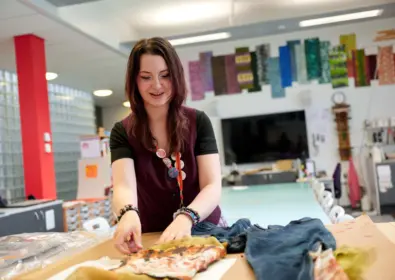
A LevelA Level Textile Design encourages students to develop their individual creativity through practical exploration and design. Working on proje…

Design Engineering
A LevelDesign Engineering A Level gives you the opportunity to create, innovate and solve real‑world problems through engineering design. You’ll ex…
Photography
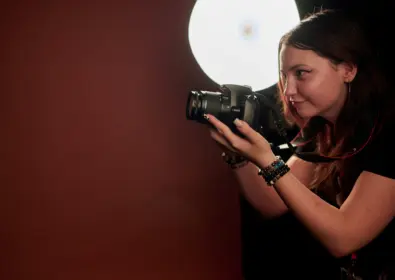
A LevelPhotography A Level encourages freedom of expression and focuses on communicating ideas, thoughts and feelings, as well as documenting momen…